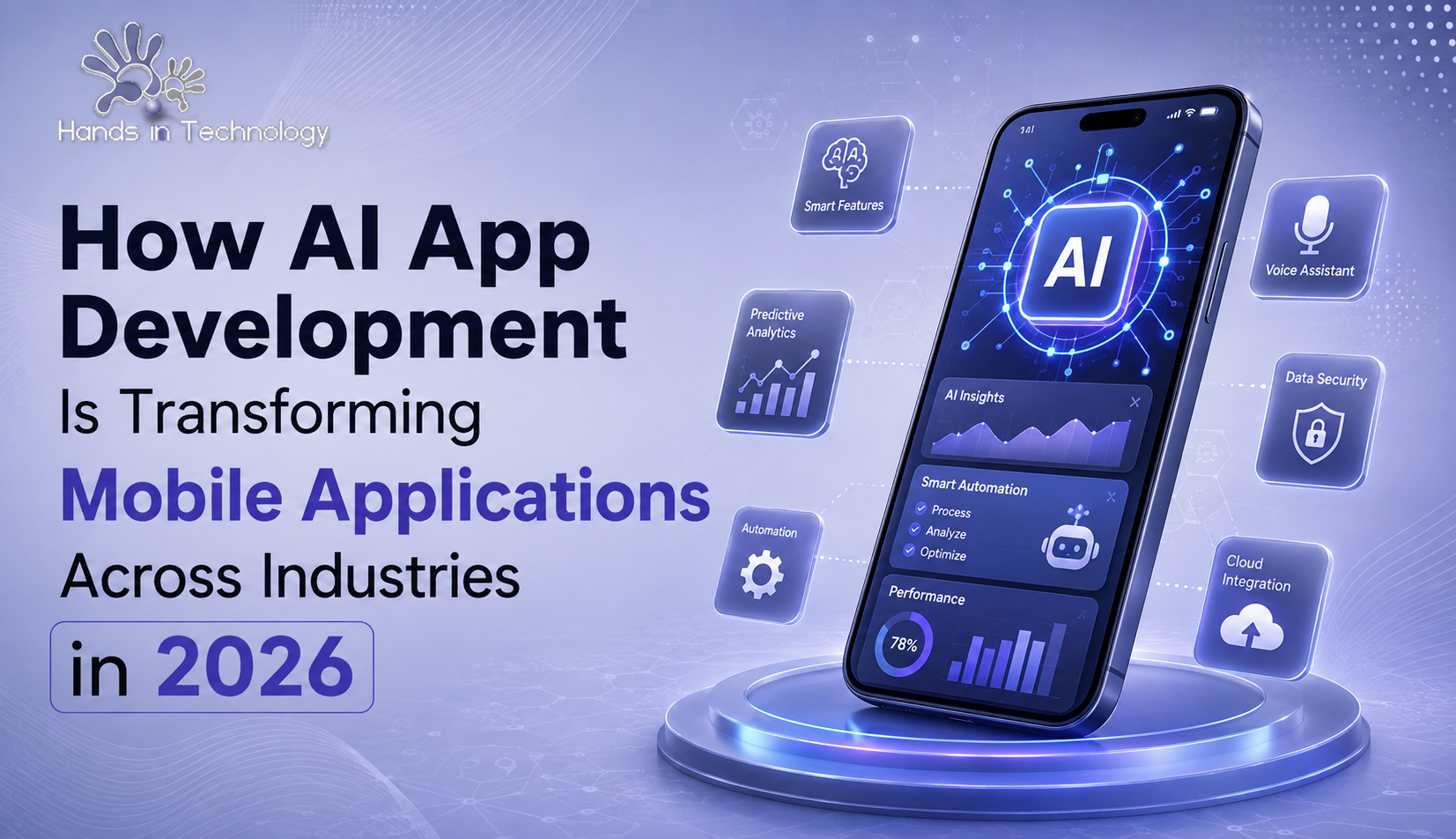
Apps which are not using AI are becoming less competitive than the ones which are using it. How AI App Development Is Transforming Mobile Applications is not a futuristic approach but a functional reality that is changing expectations of end-users, business operations and the competitive environment. Ignoring this trend may leave a company developing sub-par mobile experiences in the evolving world of mobile apps.
Introduction
Mobile apps are more than simply interfaces that take user inputs and process workflows manually. Artificial intelligence (AI) has been powering most of the current top mobile applications from both the enterprise and consumer domains, enabling intelligent personalisation, real-time decisions etc. An insight into how AI app development has changed the state of mobile apps provides business leaders the strategic context for prudent product investment.
1. AI integration is no longer a feature; it’s a must-have in mobile applications .
Enterprise and consumer users have expectations for mobile applications to be context-aware and interactive, and these are not met by rule-based applications anymore.
delaying AI integration into their mobile strategy are not saving costs they are accumulating competitive debt.
2. Core AI Capabilities Reshaping Mobile Applications
Natural Language Processing (NLP)
NLP enables mobile applications to interpret and respond to human language accurately. Business applications include:
- Voice-command navigation within enterprise mobile tools
- In-app intelligent search with contextual understanding
- Automated customer support through conversational interfaces
Computer Vision
Camera and image recognition capabilities unlock powerful mobile functionality:
- Document scanning with intelligent data extraction
- Visual product search in retail applications
- Biometric authentication through facial recognition
Predictive Intelligence
AI-powered prediction engines analyse user behaviour to anticipate actions. This capability drives:
- Proactive content and product recommendations
- Intelligent notification timing based on user activity patterns
- Risk flagging in financial and healthcare mobile platforms
On-Device Machine Learning
Edge AI deployment brings model inference directly onto mobile devices. Key advantages include:
- Real-time processing without cloud dependency
- Enhanced data privacy through local computation
- Reduced latency for time-sensitive mobile interactions
3. How AI App Development Is Transforming Mobile Applications by Industry
Healthcare
AI mobile applications now support clinical decision-making at the point of care:
- Symptom assessment and triage guidance tools
- Remote patient monitoring with anomaly alerts
- Medical image analysis accessible via mobile devices
Financial Services
Fintech mobile applications leverage AI for:
- Real-time fraud detection and transaction scoring
- Personalised financial planning and spend analysis
- Automated KYC and document verification workflows
Retail and E-Commerce
AI transforms the mobile shopping experience through:
- Visual search enabling product discovery from images
- Dynamic pricing and personalised offer delivery
- Inventory-aware recommendation engines
Logistics and Field Operations
Mobile AI empowers field teams with:
- Route optimisation using real-time traffic and constraint data
- Predictive maintenance alerts for assets and equipment
- Automated delivery confirmation and exception handling
4. Technical Foundations of AI-Powered Mobile Apps
Building an AI-integrated mobile application requires deliberate architectural decisions.
Framework and Model Integration
Development teams must evaluate:
- On-device frameworks: TensorFlow Lite, Core ML, ONNX Runtime
- Cloud AI services: AWS AI, Google Vertex AI, Azure Cognitive Services
- Hybrid architectures that balance latency, cost, and privacy requirements
Data Pipeline Design
AI models require continuous, structured data inputs. Mobile AI data pipelines must address:
- User interaction data collection with compliance controls
- Real-time data synchronisation between device and cloud
- Model retraining triggers based on performance drift
Security and Compliance
AI mobile applications operating in regulated sectors must embed:
- Differential privacy protocols for sensitive user data
- Explainability layers for AI-driven decisions
- Audit trails for compliance reporting [EXTERNAL SOURCE: GDPR and AI compliance frameworks]
[INTERNAL LINK: Mobile App Security Architecture]
5. Business Outcomes Driven by AI Mobile Development
Organisations that integrate AI into mobile applications report measurable performance improvements across critical business metrics.
Documented business outcomes include:
- Higher user engagement AI personalisation increases session depth and return visit frequency
- Reduced operational costs Automated mobile workflows eliminate manual processing overhead
- Accelerated decision cycles Real-time AI insights on mobile reduce approval and response times
- Improved customer retention Contextual, adaptive experiences reduce churn across B2B and B2C platforms
The correlation between AI investment in mobile and measurable business performance is no longer anecdotal it is documented across sectors and organisation sizes.
Conclusion
Intelligence is the new benchmark in terms of the quality of a mobile app. How AI App Development Is Transforming Mobile Applications demonstrates a shift in structure not a trend, on the way enterprises develop, deploy and scale a mobile product. Compounding benefits for the user experience, business process and market responsiveness result from an organization that embeds AI capabilities within a mobile strategy.
Hands in Technology architects AI-powered mobile applications built for enterprise scale and measurable business impact. Engage Hands in Technology to build a mobile application that operates with the intelligence your business demands.