Hook / Opening Paragraph
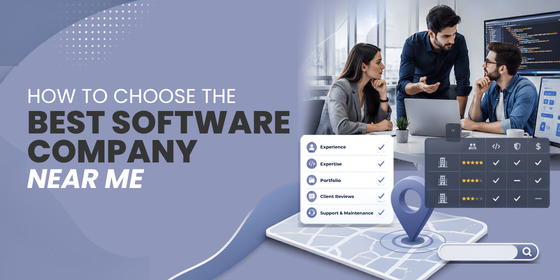
When you work with someone on a project and you are not in the place it can be really tough. Remote software partnerships can cause problems like not being able to talk to each other being in different time zones and not knowing who is responsible, for what. These problems can get worse as the project goes on. If companies do not think about these things they will have to deal with delays and not getting what they want. Remote software partnerships can be tricky so companies need to be careful. Understanding the Benefits of Working with a Software Company Near Me reframes proximity from a convenience into a strategic procurement advantage.
Introduction
Technology buying choices are more often picking vendors that are spread out located far away or work on online platforms. This makes sense because choices and supposed cheaper prices make them look good at first.. Over time the extra costs of working with someone far away not being on the same page and less responsibility start to reduce those supposed savings.
The advantages of choosing a software company to where I am go far beyond just being able to meet in person. They also include how well we can talk, sharing values, clear laws and rules and a kind of ongoing relationship that leads to much better results from projects.
1. Communication Efficiency and Real-Time Collaboration
Effective software development depends on rapid, high-quality communication between client and delivery team. Time zone differences and asynchronous workflows degrade that quality at every project stage.
Local partnership eliminates these friction points:
- Shared business hours enable real-time problem resolution
- In-person workshops accelerate requirements definition and reduce misinterpretation
- Stakeholder reviews occur on your timeline not a delayed schedule dictated by geography
- Escalation paths operate within the same working day
2. Cultural and Business Context Alignment
Software that performs technically but fails operationally often reflects a cultural and contextual gap between the development team and the business environment it serves.
A local software partner brings:
- Familiarity with domestic regulatory frameworks, compliance requirements, and industry standards
- Understanding of local market dynamics that inform UX, workflow logic, and process design
- Shared business norms that reduce the overhead of explaining organisational context from the ground up
Why context matters in software delivery:
- Workflow assumptions embedded in software design reflect the developer’s operational understanding
- A team unfamiliar with your business environment makes assumptions that generate rework
- Local partners validate design decisions against real operational context not generalised best practice
3. Accountability and Legal Clarity
Contractual enforcement across international jurisdictions introduces complexity, cost, and uncertainty that domestic partnerships avoid entirely.
Local engagement provides:
- Contracts governed by domestic law with straightforward dispute resolution mechanisms
- Intellectual property protections that operate within a known legal framework
- Clear liability structures without the ambiguity of cross-border commercial arrangements
- Regulatory compliance accountability that a local company shares with your organisation
4. Faster Onboarding and Reduced Knowledge Transfer Cost
Every software project requires substantial knowledge transfer from the client to the development team. The efficiency of that transfer directly affects project timelines and budgets.
Local partnerships accelerate onboarding through:
- On-site discovery sessions that compress weeks of remote back-and-forth into focused working days
- Direct access to subject matter experts within your organisation during critical design phases
- Reduced documentation overhead proximity enables contextual understanding that remote teams must compensate for through extensive written specification
Custom software implementation success rates improve measurably when the development team can access operational context directly rather than through filtered documentation.
5. Relationship Continuity and Long-Term Partnership Value
Software is not a one-time transaction. Maintenance, enhancement, and strategic evolution require a partner relationship that deepens over time.
Local partnerships sustain continuity through:
- Regular face-to-face engagement that builds operational familiarity and trust
- Shared investment in outcomes a local company’s reputation operates in the same market as your business
- Team stability local partners are less susceptible to the high turnover rates that affect offshore delivery models
- Strategic alignment meetings that keep technology roadmaps connected to business objectives
6. When Local Presence Delivers the Greatest Advantage
Proximity produces the strongest return on specific project profiles. Recognise where the local advantage compounds most significantly.
Local partnership delivers maximum value when:
- Projects involve sensitive data requiring domestic data residency compliance
- Operational complexity demands frequent, high-context stakeholder engagement
- The business operates in a regulated industry with jurisdiction-specific requirements
- Long-term product roadmap collaboration is central to the engagement model
- Speed of delivery is a competitive priority that cannot accommodate asynchronous workflows
Conclusion
Through all stages of the journey from research and development to implementation and transformation we see that which puts equal value in capability and proximity does better than those that do not. In Technology we bring to bear the entire range of those benefits which include technical excellence also that comes from the ability to communicate effectively, hold ourselves and our partners accountable, and which only a fully dedicated local team can provide. For organisations that require both proximity and proven capability, Hands in Technology represents the standard against which other partners should be measured.