ERP: Choosing the Right System. Businesses have two paths they can choose on implementation. The faster path, or the flexible path. Both have consequences that should be avoided. The following examines both options, their benefits, costs and applicability to your business.
Introduction
Companies are faced with an important decision when they go the route of the ERP system. There is either speed, or there is flexibility, and knowing about these alternatives could save money later. This is a guide on features, cost and appropriate usage
Understanding the Two ERP Approaches
ERP systems fall into two broad categories. Each serves different business sizes and requirements.
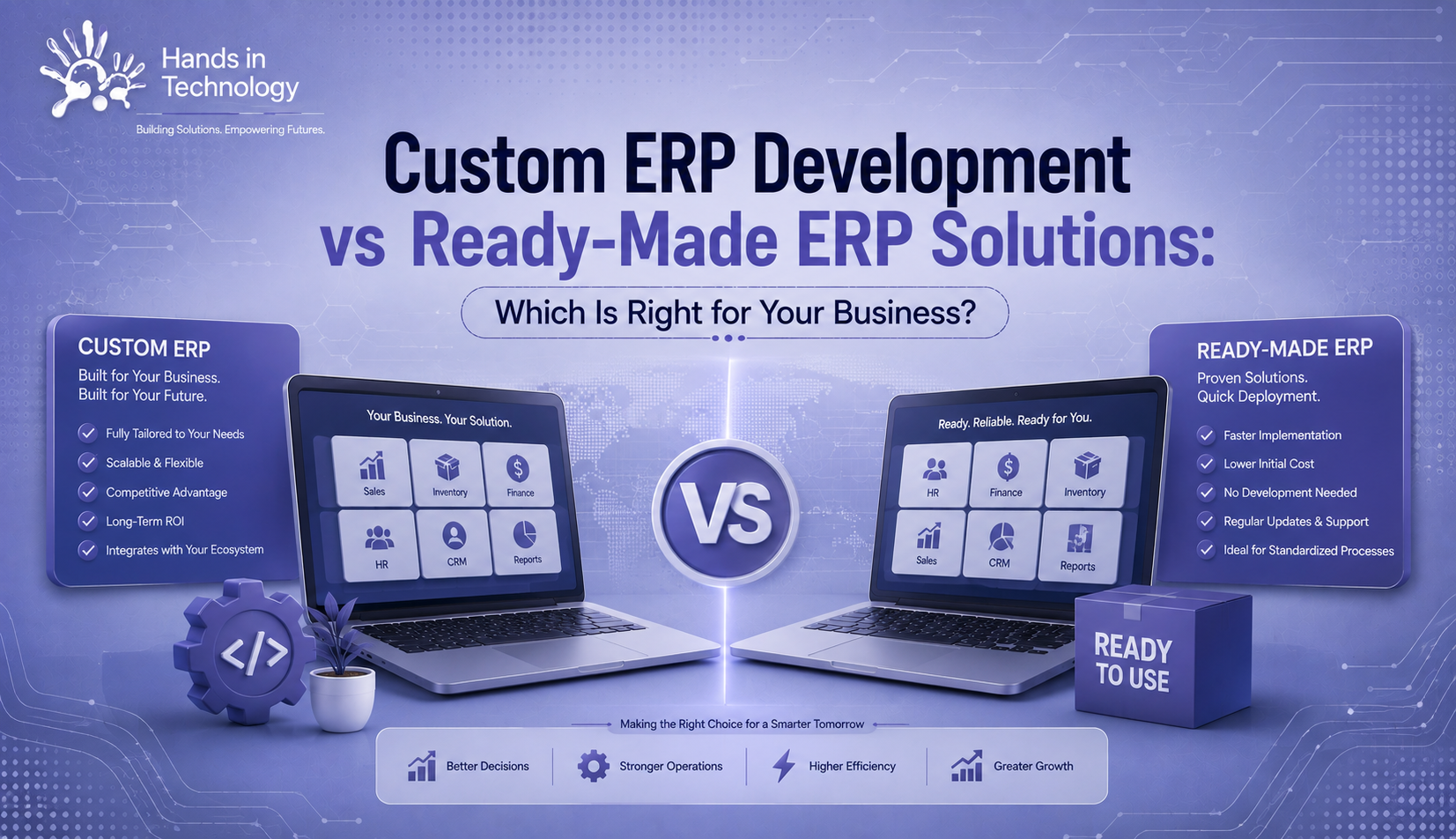
- Ready-made ERP: Pre-built, standardized features
- Custom ERP: Built specifically for unique processes
Lots of start-ups quickly run out of standard software.
Ready-made ERP packages – pros and cons
Out-of-the-box solutions are quick to implement.
Advantages
- Lower upfront cost
- Faster implementation timeline
- Established support communities
Disadvantages
- Limited customization options
- Unnecessary features increase complexity
- Licensing fees grow with scaling
Custom ERP Development: Pros and Cons
Custom solutions align directly with business workflows.
Advantages
- Tailored features for specific operations
- Scalable architecture for future growth
- Full ownership of source code
Disadvantages
- Higher initial investment required
- Longer development timeline
- Requires ongoing technical support
This enterprise resource planning software approach suits complex operations best.
Important Factors to consider prior to making a decision:
It is of paramount importance that there are a number of factors that will affect the correct decision.
- Business size and growth projections
- Complexity of existing workflows
- Available budget and timeline
- Long-term scalability needs
Industry-Specific Requirements
Some industries need specialized compliance features.Custom development handles these requirements effectively.
Cost Comparison Overview
Pricing differs significantly between both approaches.
- Ready-made ERP: Subscription-based, predictable monthly costs
- Custom ERP: Higher upfront, lower long-term licensing fees
Which Option Fits Your Business
Smaller businesses often benefit from ready-made solutions. Larger enterprises with complex needs favor custom development.
- Choose ready-made for quick, standard processes
- Choose custom for unique, scalable requirements
Conclusion
Choosing between custom ERP development and out-of-the-box ERP solutions comes down to the needs of the business.Both solutions have a set of benefits and limitations, and you need to assess how complex your workflow is to understand what solution works best. If you’re prepared to look into bespoke ERP solutions, speak with an expert today.